A Classic Game of Skill, Strategy, and (Mostly) Friendly Competition
Cornhole is more than just a backyard game – it’s a community, a sport, and a staple of great events. Whether you’re a casual player or a seasoned competitor, cornhole offers a simple setup, fast-paced fun, and just the right amount of challenge.

The History of Cornhole
While the exact origins of cornhole are widely debated, most agree it’s been around for generations. Some trace it back to 14th-century Germany, while others credit Native American tribes with creating similar games. But the modern version we know today gained popularity in the Midwest, particularly in Cincinnati, Ohio, where it became a tailgate essential and backyard favorite.
Today, cornhole has grown into a full-fledged sport, with national tournaments, custom boards, and leagues around the country.
How to Play: Classic Cornhole Rules
Whether you’re stepping up to the boards for the first time or brushing up before your next tournament, learning the basic rules of cornhole is the first step toward mastering the game.
Here’s a breakdown of the classic setup, scoring system, and game flow,. so you can play with confidence – and maybe even rack up a few four-baggers of your own!
The Setup
- Two boards are placed 27 feet apart from front edge to front edge.
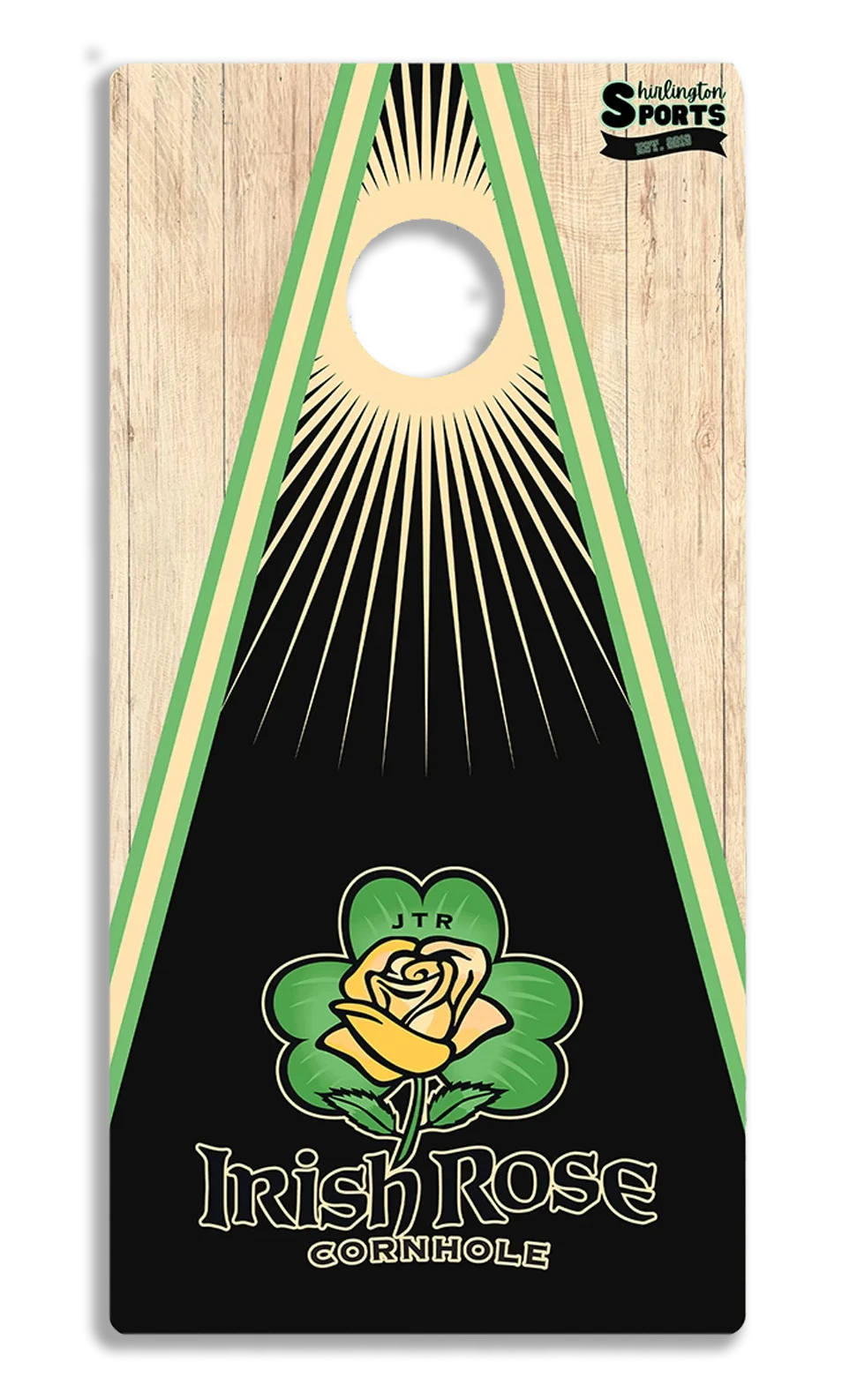
- Each board has a 6-inch hole, centered 9 inches from the top.
- Players use cornhole bags (four per team), with each team using a different color.
The Teams
- Cornhole is played with 2 or 4 players (1-on-1 or 2-on-2).
- In doubles, teammates stand at opposite boards and alternate turns.
The Goal
- Toss your bag onto the board or into the hole to earn points.
- A bag in the hole is worth 3 points.
- A bag on the board is worth 1 point.
- Bags that touch the ground (even if they bounce onto the board) earn 0 points.
Scoring Style: Cancellation Scoring
- Only one team scores per round.
- The team with the higher score earns the difference in points.
- Example: If Team A scores 7 and Team B scores 5, Team A receives 2 points for that round.
Winning the Game
- Games are typically played to 21 points.
- In standard play, you do not need to hit 21 exactly – going over still counts as a win. (Some house rules may vary!)